
Tracy Previous Residents Sources
The era table shows what each source can and cannot do. Coverage is real but uneven. The online recorder index starts in 1968, while the recorded collection reaches 1851. Polk directories have confirmed selected years from 1936 through 1981. Census pages are public through 1950 in 2026, and Sanborn maps provide seven dated building snapshots.
| Source | Years it covers | Where held | What it shows |
|---|---|---|---|
| San Joaquin online recorder | January 1, 1968 to present | County portal; CAPTCHA gate | Party-indexed deeds, liens, trusts, and recorded events |
| Recorder deed books and film | 1851 to 1967 | Stockton counter and office holdings | Older instruments, indexes, legal descriptions |
| Polk’s Tracy city directories | 1936-38, 1956, 1959, 1963, 1965-67, 1969-70, 1972, 1976-81 | FamilySearch or Ancestry leads and library category | Dated names, addresses, household and work lines |
| Tracy Press microfilm | 1909 to present | Tracy Branch Library | Obituaries, notices, addresses, civic and business events |
| Sanborn maps | 1892, 1897, 1907, 1911, 1913, 1921, 1945 | Library of Congress | Blocks, footprints, uses, and old address context |
| Federal census | Through 1950 in 2026 | NARA and authorized genealogy access | Enumerated households at a census date |
| Probate and obituaries | Event dependent | Superior Court, newspaper, library, archives | Death, heir, spouse, and former-address clues |
Previous residents are reconstructed by pairing rows, not by assuming one source is complete. Preserve the page, date, APN, document number, and exact spelling for each step.
Tracy APN First
Start with today’s situs address in the San Joaquin District Viewer. Capture the APN, parcel history, assessment map, acreage, use, year built, and legal geography. Owner and mailing fields are hidden in the public web view, so obtain the current owner from the newest deed or a county counter source before going backward.
- Search the exact street number and legal street name, leaving off direction and the suffix.
- Record the APN, situs, city-limit, ZIP, post office, and map or subdivision clues.
- Find the newest recorded instrument and confirm its APN and legal description.
- Label the current party as owner, lender, trustee, grantor, or grantee before using the name.
- Carry the instrument’s prior party and recording date to the next backward search.
An APN is the stable bridge when an address label changes. A legal description controls the land identity. A street address helps find the parcel but is not the deed’s full identity.
Tracy Grantor Grantee Trail
In a deed chain, the grantee receives the interest and the grantor conveys it. Search the current owner as grantee, read the acquisition deed, then search the earlier grantor as grantee. Repeat with spelling variants, spouses, trusts, entities, and referenced documents. Keep liens and releases in a separate column because a Deed of Trust is financing, not a title transfer, and a reconveyance is loan payoff.
Document numbers from 2000 use the YYYY-###### pattern in the county notes. Earlier numbers use YY######. The online name index is a pointer and may contain a same-name match. Compare the underlying legal description, APN, recording date, and referenced release or prior deed before accepting the chain.
- Search the newest grantee and save party role, date, document number, APN, and legal description.
- Move to the grantor named in that instrument and search earlier dates.
- Check spouses, trusts, entities, alternate spellings, and retired parcel numbers.
- Use recorded maps for lot, block, subdivision, and parcel changes.
- Switch to the counter’s digital or film books when the web index stops.
The chain identifies title events. It does not identify every occupant. That second layer belongs to directories, newspapers, census, and probate.
Tracy Recorder Cutoff 1968
The web grantor and grantee index begins January 1, 1968. It is tempting to treat that date as the start of the record, but the county’s recorded collection reaches 1851. Pre-1968 material is available through digital or film deed books and indexes at the Stockton office. Recorded maps also reach 1851.
This is a useful numbers clue for previous residents. A 1967 owner may be invisible to the online search but visible at the counter. A 1950s address may need the deed book, a directory, a census page, and a newspaper rather than a modern portal. Ask the Recorder about the exact book, index, image, copy, and certification route before traveling.
Recorder counter services are at 44 N. San Joaquin Street, Suite 260, Stockton, weekdays 8 to 4:30, with recording through 4. The county lists $1 self-copy, $3 staff copy, $2 certification per document, and $5 map copies plus $2 certification.
[RESEARCH GAP: The manifest did not produce a successful grantor-grantee screenshot for this page; use the live San Joaquin Recorder index for the current gate and fields.]
Tracy Directories and Deeds
A city directory gives the household layer. A deed gives the title layer. Pairing them can show that an owner and occupant were the same person, or that a family rented from an owner who lived elsewhere. The confirmed Polk years include 1936, 1937, 1938, 1956, 1959, 1963, 1965 to 1967, 1969, 1970, 1972, and 1976 to 1981.
The Tracy city directory collection has the volume and entry method. For one address, transcribe the name, exact address, household relationship, line of work, and any owner or renter mark that the volume itself explains. Then check the prior and next edition. A missing name may mean a move, a publication gap, an initial error, or a missed reverse section.
[RESEARCH GAP: A Tracy Branch house-history guide and exact shelf run were not exposed by the manifest; confirm those details with the librarian through the Tracy Branch page.]
Do not infer a title transfer from a directory. Do not infer a current household from an old deed. The strength comes from the date and the independent source.
Tracy Census Households Through 1950
Federal census pages provide a household snapshot under the 72-year rule. In 2026, the public span reaches through 1950. Pair a 1936 to 1938 directory with the 1940 census, then compare a 1956 or 1959 directory with the 1950 census as a near-period anchor. Later census years remain closed under the same release schedule.
The National Archives census research page explains the public release rule and the official route for household enumeration research.
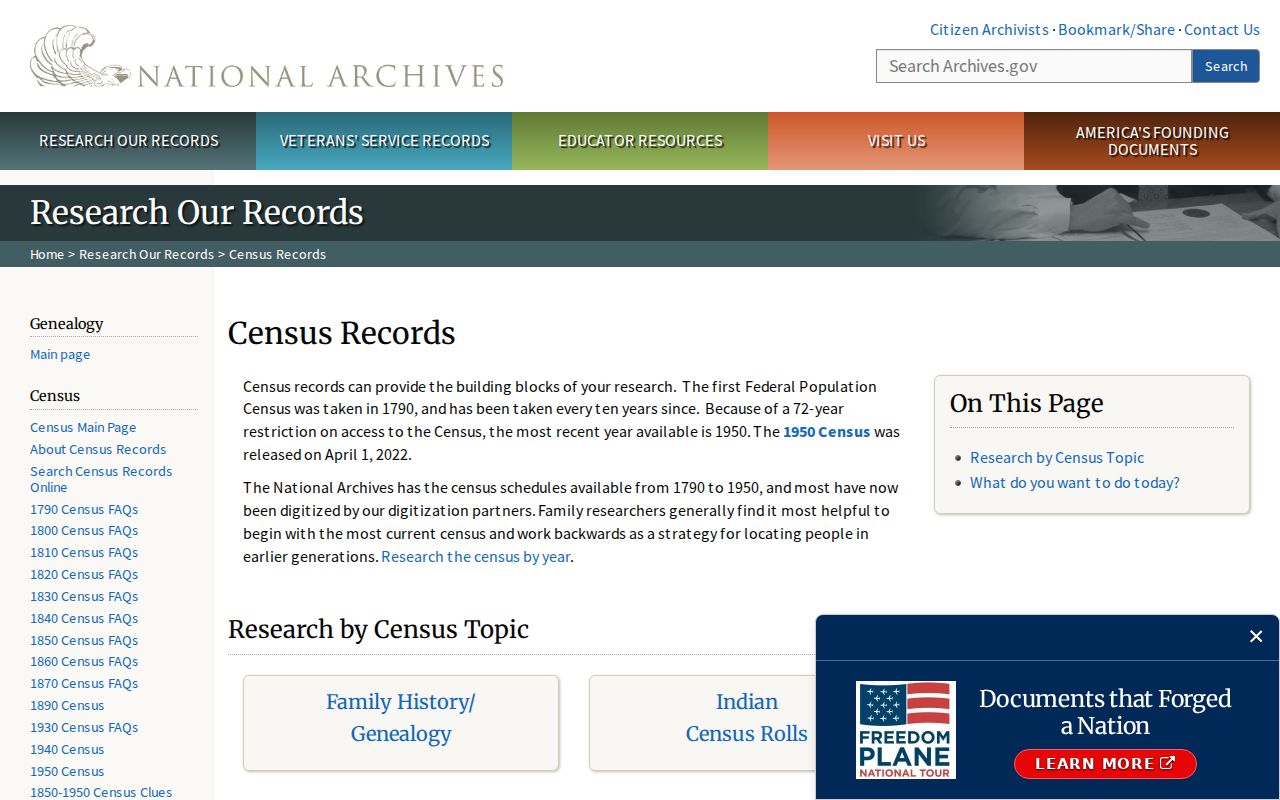
Census names, ages, relationships, birthplace, and occupation fields can distinguish same-name households, but the census is a date-bound enumeration. It does not prove title, later movement, or current presence.
Tracy Sanborn House History
Sanborn sheets preserve block and building context for 1892, 1897, 1907, 1911, 1913, 1921, and 1945. A map can show a house footprint, business, railroad feature, school, hotel, or change in use when a directory gives only a street line. Match the lot, block, and legal description to the deed and census.
The map does not name every resident. Its value is continuity. If an address seems to disappear, compare the building footprint and nearby lots across the dated sheets. An old street label can then be tested against a later APN, newspaper notice, or directory entry.
Sanborn is strongest as a bridge between physical place and documentary name. It should not be used to invent an owner or fill a year that the research did not verify.
[RESEARCH GAP: No successful manifest image for a digitized criss-cross or Sanborn collection was available; use the Library of Congress item directly.]
Tracy Museum Address Clues
Tracy Historical Museum at 1141 Adam Street at 12th keeps local written, audio, video, photograph, and artifact material. It lists (209) 832-7278, tracymuseum@sbcglobal.net, Monday and Saturday hours from 10 to 2, and free admission. Archive material can be viewed and photo copies can be ordered.
The Tracy Museum archive page is the local route for family, railroad, agricultural, school, and downtown context.
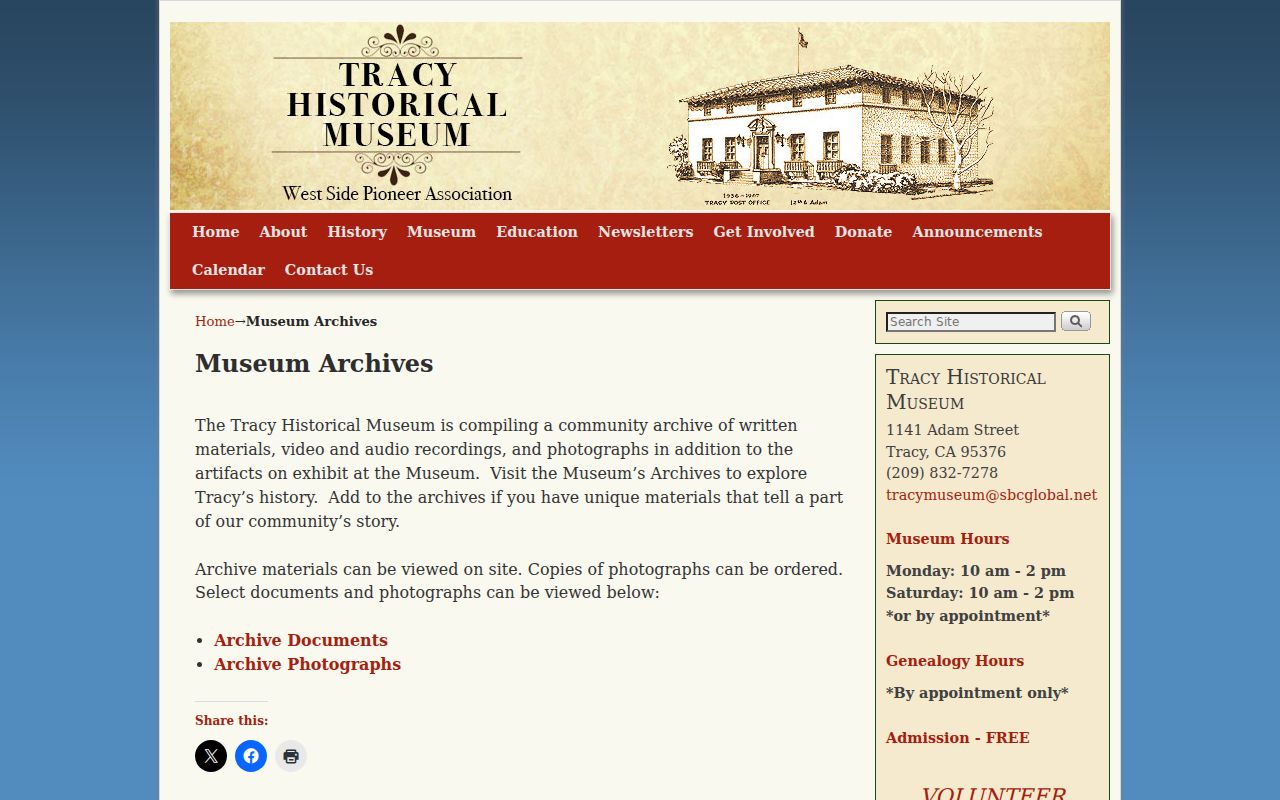
Named publications include Lincoln Highway, the 1850 to 1880 Carrell of Corral Hollow diary, and History of Tesla from 1896 to 1911. Ask for a named person, family, business, or subdivision file. Do not treat a museum accession as a current resident source.
Tracy Regional Archives
Holt-Atherton Special Collections at the University of the Pacific in Stockton offers manuscript, book, digital, photograph, and Western Americana holdings. It can add San Joaquin and Japanese-American history to a Tracy address trail. The San Joaquin County Historical Society and California State Library add regional and state catalog routes.
The Holt-Atherton collections page gives the public research route for regional manuscript and local-history context.

For people who lived in the railroad and agricultural period, search Tracy with Ellis, Lathrop, Tulare Township, Tesla, and Corral Hollow. A place variant can be the difference between an empty name search and a usable family record.
Tracy Address Name Changes
An authoritative wholesale Tracy street-renumbering year was not located. The safe method is to compare old addresses, lots, blocks, maps, and legal descriptions rather than assert a formal renumbering. The city’s separate address-point, street-centerline, annexation, sphere, and parcel layers can help explain a modern mismatch.
Tracy’s early history also creates place-name changes. The 1878 junction drew people and businesses from Ellis. Railroad headquarters moved from Lathrop to Tracy in 1894. Older residents may be indexed under a township, rural route, railroad station, or Corral Hollow label. Test those terms before deciding that a record is missing.
A new permit or code file may sit with the city only after a subdivision or annexation is accepted. Before that point, county records can be the better address trail.
Tracy Previous Residents Limits
Previous residents are inferred from dated evidence. Owners, renters, children, guests, and household members do not appear in the same sources. A deed can name a trust. A directory can contain an initial error. A census can miss a person who was away. An obituary can include a former address without telling where the person lived later.
House-history use. Use a past-resident trail for genealogy, heir research, local history, reconnecting, and estate work. Do not use an old address to stalk, harass, intimidate, or harm a living person.
Save the source date and role for every name. The result will be clearer, safer, and more useful when it says “owner in deed,” “occupant in directory,” “household member in census,” or “heir in probate” instead of simply calling everyone a resident.